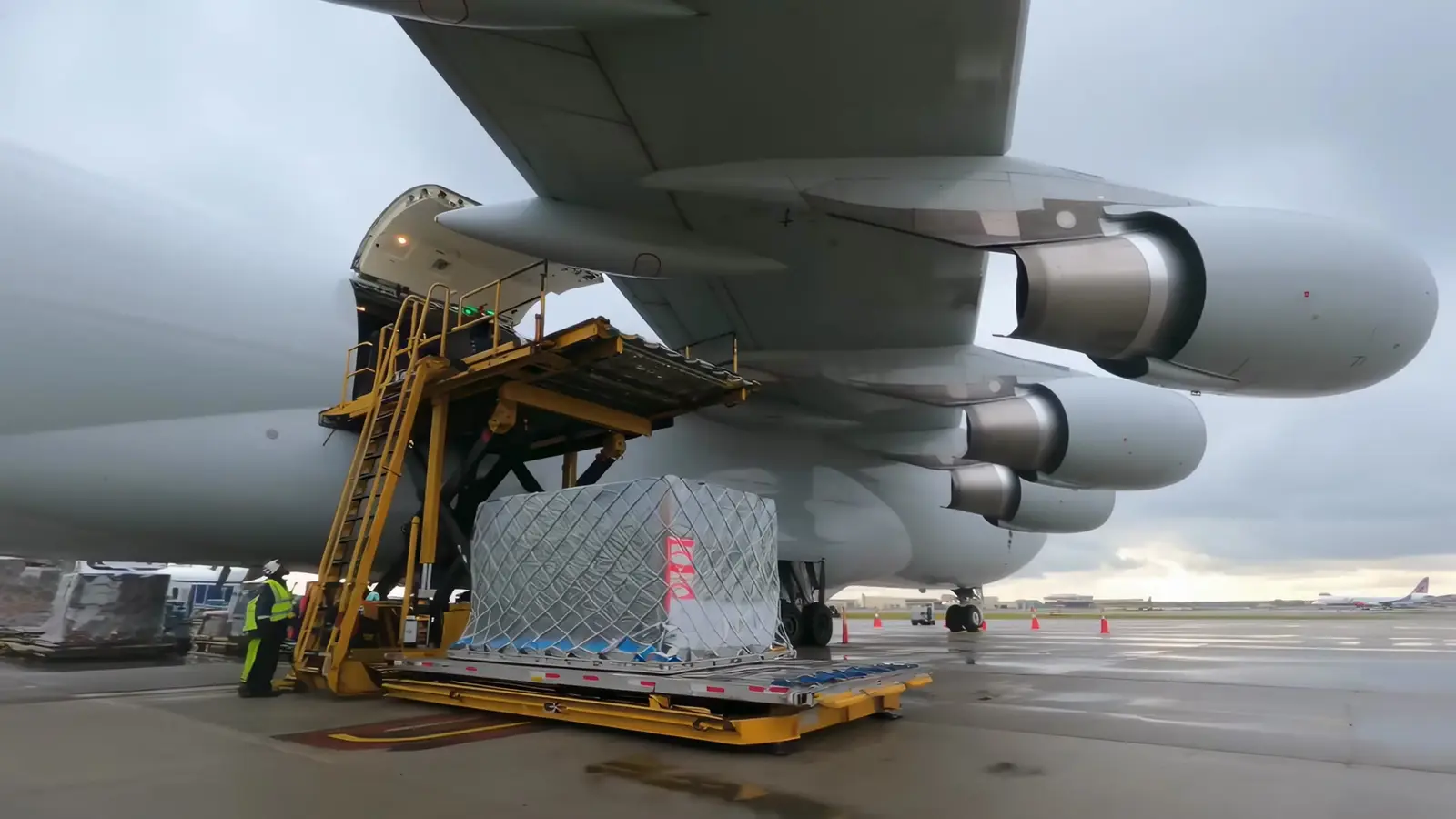
On their own, packed with equipment or built into it: by air, road or sea. Our IATA DGR-certified team classifies, packs, marks and documents every shipment, with a strong focus on medical equipment and healthcare.
Cargo aircraft onlyForbidden on passenger aircraft; up to 10 kg of batteries per package on cargo aircraft
Strong rigid outer packaging able to withstand a 3 m stack test; no UN-specification packaging needed
Class 9 lithium battery hazard label
Cargo Aircraft Only label
Lithium battery mark
Shipper’s Declaration for Dangerous Goods
UN 38.3 test summary available from the manufacturer
At most 30% of rated capacity (mandatory)
Lithium-ion, on their own, over 100 Wh
UN3480Lithium ion batteries
PI 965, Section IA
Cargo aircraft onlyForbidden on passenger aircraft; up to 35 kg of batteries per package on cargo aircraft
UN-specification packaging (Packing Group II performance)
Class 9 lithium battery hazard label
Cargo Aircraft Only label
Shipper’s Declaration for Dangerous Goods
UN 38.3 test summary available from the manufacturer
At most 30% of rated capacity (mandatory)
Lithium-ion, packed with equipment, up to 100 Wh
UN3481Lithium ion batteries packed with equipment
PI 966, Section II
Passenger or cargo aircraftUp to 5 kg of batteries per package, passenger and cargo aircraft
Strong rigid packaging able to withstand a 1.2 m drop test
Lithium battery mark
No Shipper’s Declaration; a Section II statement on the air waybill when the package carries the battery mark
UN 38.3 test summary available from the manufacturer
At most 30% for batteries above 2.7 Wh, mandatory since 1 January 2026
Lithium-ion, packed with equipment, over 100 Wh
UN3481Lithium ion batteries packed with equipment
PI 966, Section I
Passenger or cargo aircraftUp to 5 kg of batteries per package on passenger aircraft, 35 kg on cargo aircraft
UN-specification packaging (Packing Group II performance)
Class 9 lithium battery hazard label
Shipper’s Declaration for Dangerous Goods
UN 38.3 test summary available from the manufacturer
At most 30% of rated capacity, mandatory since 1 January 2026
Lithium-ion, inside equipment, up to 100 Wh
UN3481Lithium ion batteries contained in equipment
PI 967, Section II
Passenger or cargo aircraftUp to 5 kg of batteries per package, passenger and cargo aircraft
Strong rigid outer packaging, unless the equipment itself protects the battery; secured against switching on by accident
Lithium battery mark (not needed for up to 4 cells or 2 batteries installed per package, at most 2 packages per consignment)
No Shipper’s Declaration; a Section II statement on the air waybill when the package carries the battery mark
UN 38.3 test summary available from the manufacturer
30% (or 25% indicated capacity) strongly recommended, not mandatory
Lithium-ion, inside equipment, over 100 Wh
UN3481Lithium ion batteries contained in equipment
PI 967, Section I
Passenger or cargo aircraftUp to 5 kg of batteries per package on passenger aircraft, 35 kg on cargo aircraft
Strong rigid outer packaging, unless the equipment itself protects the battery; secured against switching on by accident
Class 9 lithium battery hazard label
Shipper’s Declaration for Dangerous Goods
UN 38.3 test summary available from the manufacturer
30% (or 25% indicated capacity) strongly recommended, not mandatory
Lithium metal, on their own, up to 2 g lithium
UN3090Lithium metal batteries
PI 968, Section IB
Cargo aircraft onlyForbidden on passenger aircraft; up to 2.5 kg of batteries per package on cargo aircraft
Strong rigid outer packaging able to withstand a 3 m stack test; no UN-specification packaging needed
Class 9 lithium battery hazard label
Cargo Aircraft Only label
Lithium battery mark
Shipper’s Declaration for Dangerous Goods
UN 38.3 test summary available from the manufacturer
No state-of-charge limit for lithium metal
Lithium metal, on their own, over 2 g lithium
UN3090Lithium metal batteries
PI 968, Section IA
Cargo aircraft onlyForbidden on passenger aircraft; up to 35 kg of batteries per package on cargo aircraft
UN-specification packaging (Packing Group II performance)
Class 9 lithium battery hazard label
Cargo Aircraft Only label
Shipper’s Declaration for Dangerous Goods
UN 38.3 test summary available from the manufacturer
No state-of-charge limit for lithium metal
Lithium metal, packed with equipment, up to 2 g lithium
UN3091Lithium metal batteries packed with equipment
PI 969, Section II
Passenger or cargo aircraftUp to 5 kg of batteries per package, passenger and cargo aircraft
Strong rigid packaging able to withstand a 1.2 m drop test
Lithium battery mark
No Shipper’s Declaration; a Section II statement on the air waybill when the package carries the battery mark
UN 38.3 test summary available from the manufacturer
No state-of-charge limit for lithium metal
Lithium metal, packed with equipment, over 2 g lithium
UN3091Lithium metal batteries packed with equipment
PI 969, Section I
Passenger or cargo aircraftUp to 5 kg of batteries per package on passenger aircraft, 35 kg on cargo aircraft
UN-specification packaging (Packing Group II performance)
Class 9 lithium battery hazard label
Shipper’s Declaration for Dangerous Goods
UN 38.3 test summary available from the manufacturer
No state-of-charge limit for lithium metal
Lithium metal, inside equipment, up to 2 g lithium
UN3091Lithium metal batteries contained in equipment
PI 970, Section II
Passenger or cargo aircraftUp to 5 kg of batteries per package, passenger and cargo aircraft
Strong rigid outer packaging, unless the equipment itself protects the battery; secured against switching on by accident
Lithium battery mark (not needed for up to 4 cells or 2 batteries installed per package, at most 2 packages per consignment)
No Shipper’s Declaration; a Section II statement on the air waybill when the package carries the battery mark
UN 38.3 test summary available from the manufacturer
No state-of-charge limit for lithium metal
Lithium metal, inside equipment, over 2 g lithium
UN3091Lithium metal batteries contained in equipment
PI 970, Section I
Passenger or cargo aircraftUp to 5 kg of batteries per package on passenger aircraft, 35 kg on cargo aircraft
Strong rigid outer packaging, unless the equipment itself protects the battery; secured against switching on by accident
Class 9 lithium battery hazard label
Shipper’s Declaration for Dangerous Goods
UN 38.3 test summary available from the manufacturer
No state-of-charge limit for lithium metal
Source: IATA Dangerous Goods Regulations, 67th edition (2026), and the IATA Battery Guidance Document 2026.
How we prepare a lithium shipment.
5 steps · one coordinator
CHECKTESTPACKDOCSBOOK
01 / 05 · CHECK
Classification
We confirm the UN number, packing instruction and section from your battery data: chemistry, watt-hours or lithium content, and how the batteries travel.
Lithium-ion or lithium metal
Watt-hours or lithium content per cell and battery
On their own, packed with or inside equipment
02 / 05 · TEST
Test summary & charge
Every cell and battery type must have passed the UN 38.3 tests. We check the test summary and, for lithium-ion, the state of charge wherever the rules set a limit.
UN 38.3 test summary from the manufacturer
State of charge at or below 30% where required
No damaged or defective batteries
03 / 05 · PACK
Packing & marks
We arrange UN-specification packaging where it is required, and can pack and prepare the shipment ourselves, with the right marks and labels.
UN-specification packaging arranged
Terminals protected against short circuit
Class 9 label, battery mark and Cargo Aircraft Only label as required
04 / 05 · DOCS
Documents
The Shipper’s Declaration for Dangerous Goods, or the Section II statement on the air waybill, plus the customs documents.
Shipper’s Declaration for Section I shipments
Section II statement on the air waybill
Export and import customs documents
05 / 05 · BOOK
Booking & delivery
Booked with a carrier that accepts the batteries, on a cargo aircraft when the rules require it, or by road or sea when that suits better. Delivered door to door.
Project · medical equipment to a hospital in Kenya
Medical equipment & healthcare
Lithium inside medical equipment.
Monitors, pumps, portable scanners: much of today’s medical equipment runs on lithium-ion, often with a spare pack in the box. That is where our experience lies: medical equipment, healthcare, pharmaceuticals and other specialised cargo.
Equipment with batteries inside (UN3481, PI 967)
Spare packs in the same box (PI 966, at 30% charge or less since 2026)
Temperature data loggers travelling with pharma
The complete process: air freight, road transport, customs clearance, documentation, special handling and time-critical delivery
By air, road and sea.
Subject to the applicable regulations, carrier acceptance and the classification of the batteries.
UN3480 covers lithium-ion batteries shipped on their own, including power banks (packing instruction 965). UN3481 covers lithium-ion batteries packed with the equipment they power (PI 966) or contained in it (PI 967). Lithium metal batteries follow the same split: UN3090 on their own, UN3091 with or inside equipment.
Can lithium batteries fly on passenger aircraft?
Not when they travel on their own: UN3480 and UN3090 are cargo aircraft only. Batteries packed with or contained in equipment (UN3481, UN3091) can fly on passenger aircraft, up to 5 kg of batteries per package.
What state of charge is required in 2026?
Lithium-ion batteries shipped on their own (UN3480) must be at no more than 30% of rated capacity. Since 1 January 2026 the same limit applies to lithium-ion batteries packed with equipment (PI 966); in Section II it applies to batteries above 2.7 Wh. For batteries contained in equipment, 30% (or 25% indicated capacity) is strongly recommended but not mandatory.
Which documents do I need for a lithium battery shipment?
The manufacturer must make a UN 38.3 test summary available for every cell and battery type. Fully regulated shipments (Section I, IA and IB) need a Shipper’s Declaration for Dangerous Goods; Section II shipments do not, but carry a compliance statement on the air waybill when the package bears the battery mark. The IATA rules do not require a safety data sheet for batteries.
Do temperature data loggers count as lithium battery shipments?
A logger that is switched on and tracking your shipment is excepted from the rules when it meets IATA’s conditions, including a lithium-ion battery of no more than 20 Wh or lithium metal of no more than 1 g. Loggers shipped as cargo on their own, not in use, are regulated as batteries contained in equipment.
Do you ship damaged or defective lithium batteries?
No. Express Cargo does not accept damaged or defective lithium batteries, even where a special approval might be possible. By air, batteries that are damaged or recalled for safety reasons are forbidden (IATA Special Provision A154).
Lithium batteries to move?
Send the battery type, the watt-hours and how they travel. A coordinator who knows the rules comes back to you fast.